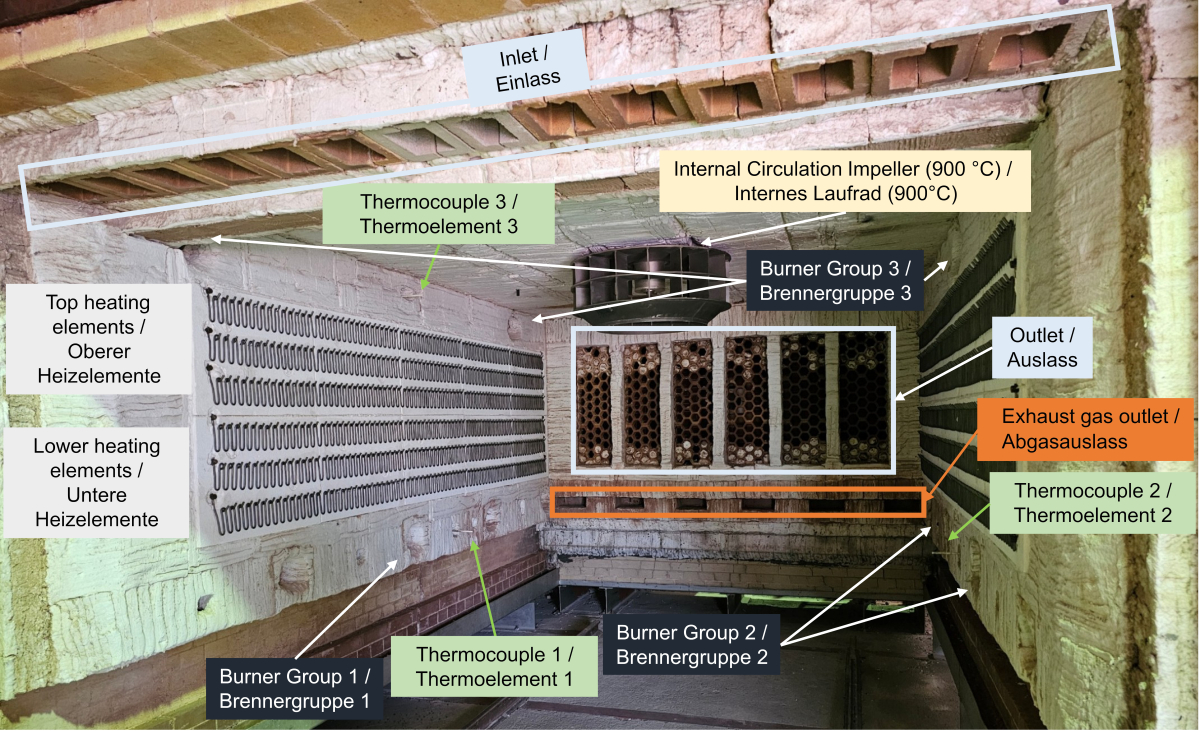
| | Einfluss der internen Atmosphärenumwälzung auf den Temperaturverlauf bei elektrischer Beheizung |  |
|
| 
IZF
|
| | In Deutschland verursacht die Ziegelindustrie jährlich etwa 1,73 Millionen Tonnen CO2-Emissionen [1]. Mehr als 56 % dieser Emissionen sind auf den Einsatz von Erdgas für den Trocknungs- und Brennprozess in der gesamten Produktionskette zurückzuführen. In der Ziegelindustrie erfolgt der Brennprozess in einem Tunnelofen. Die Elektrifizierung des Tunnelofenprozesses wurde aufgrund verschiedener Faktoren – von Preis und Verfügbarkeit bis hin zur Vermeidung der durch den Erdgaseinsatz verursachten Scope-1-Emissionen – als Alternative zum Einsatz von Wasserstoff oder Ammoniak in Betracht gezogen. ...
|
| » zum Artikel
|
|
|
|---|
|
|
|
| |
|
| | Influence of internal atmosphere circulation on the temperature development with electrical heating elements | |
|
| In Germany, the brick and tile industry emits about 1.73 million tons of CO2 per year [1]. More than 56% of this emission is due to the use of natural gas for the drying and firing process in the entire manufacturing chain. In the brick and tile industry, the firing process is carried out in a tunnel kiln. Electrification of the tunnel kiln process has been considered as an alternative to the use of hydrogen or ammonia due to factors ranging from price and availability to avoiding the scope 1 emissions due to natural gas usage. ...
|
| » read article
|
|
|
|
| |
|
 |
|


|
|
|
| | Ungenutztes ökologisches Potenzial bei der Lebenszyklusanalyse nachhaltiger Gebäude | |
|
| 
INTEP
|
| | Die Ökobilanz von Gebäuden wird in deutschen Systemen üblicherweise über einen festen Referenzzeitraum (RSP) von 50 Jahren durchgeführt. Dabei wird jedoch die tatsächliche technische Lebensdauer langlebiger Baumaterialien wie Dach- und Mauerziegel nicht adäquat berücksichtigt, da diese wesentlich länger genutzt werden können. Die vorgeschlagene Methode entwickelt einen „Langlebigkeitsbonus“, der es ermöglicht, die Langlebigkeit von Mauer- und Dachziegelkonstruktionen in der Lebenszyklusanalyse von Gebäuden gemäß den geltenden Normen zu berücksichtigen. ...
|
| » zum Artikel
|
|
|
|---|
|
|
|
| |
|
| | Untapped environmental potential in the life cycle assessments of sustainable buildings | |
|
| The life cycle assessment of buildings in German systems is usually carried out over a fixed reference study period (RSP) of 50 years. However, this does not consider the actual technical service life of durable building materials such as bricks and roof tiles, which are often used for much longer than this. The proposed method presents a “longevity bonus”, which enables the durability of bricks and roof tiles to be taken into account in the building life cycle assessment in accordance with applicable standards. ...
|
| » read article
|
|
|
|
| |
|
|
|
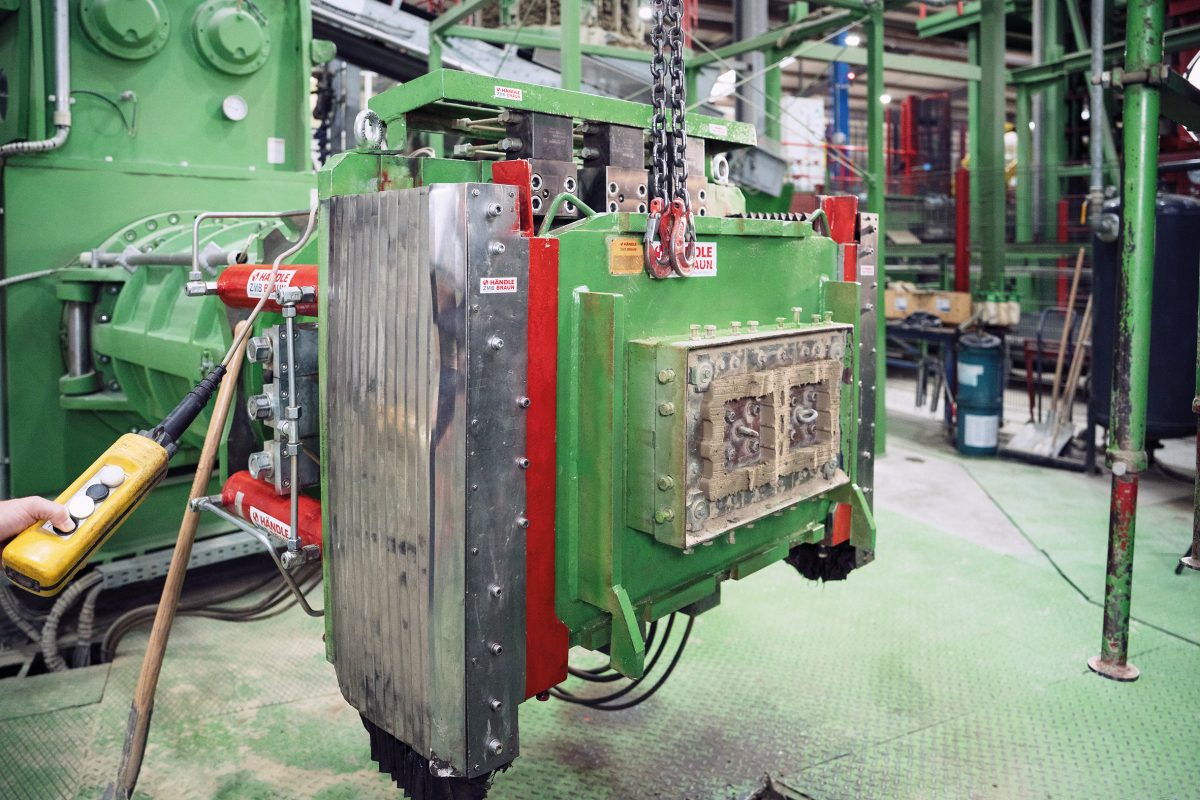
| | Sichere und effiziente Mundstückwechsel am Extruder | |
|
| 
ZMB Braun
|
| | In vielen Ziegelwerken bleibt erhebliches Einsparpotenzial ungenutzt, obwohl bewährte Lösungen verfügbar sind und sich die Investition häufig innerhalb kurzer Zeit amortisiert, in vielen Fällen deutlich unter einem Jahr. Dies zeigt sich insbesondere beim Mundstückwechsel am Extruder: Was als unvermeidbarer Produktionsstillstand erscheint, verursacht über das Jahr betrachtet einen erheblichen Zeit- und Kostenaufwand. Hinzu kommen hohe Pressdrücke und Temperaturen sowie schwere Bauteile, die den Mundstückwechsel nicht nur zeitintensiv, sondern auch sicherheitskritisch machen. ...
|
| » zum Artikel
|
|
|
|---|
|
|
|
| |
|
| | Safe and efficient die changes on extruders | |
|
| In many brickworks, significant potential for savings remains untapped, even though tried-and-tested solutions are available and the investment often pays for itself within a short period of time – in many cases well under a year. This is particularly evident when changing the die on the extruder: what appears to be an unavoidable production stoppage results in a considerable expenditure of time and money when viewed over the course of a year. Added to this are high pressing pressures and temperatures, as well as heavy components, which make die changes not only time-consuming but also a safety hazard. ...
|
| » read article
|
|
|
|
| |
| | | | | Call for projects | Deadlines |
| |
| |
|  |


