|
|
|
|
|
|
|
|
|
Dear reader,
From AI-driven drug development to sustainable bioprocessing, biotechnology is providing solutions to some of today’s most pressing health and environmental challenges. This is why it is one of six key technologies in Germany, receiving substantial funding and support.
Germany is already home to more than 1,000 biotech companies, which employ around 56,000 people. In 2024 alone, 4.6 billion euros were invested in biotechnology R&D across the country. Through the Federal Ministry of Research, Technology and Space’s High-Tech Agenda Germany, biotechnology will receive even more funding in the coming years, with a strong focus on strengthening the links between academia and industry.
In this newsletter issue, we introduce some of Germany’s leading players and showcase current innovations in biotechnology. We wish you an insightful and enjoyable read! | | | | |
|
| Wherever you see this tag, the post connects to our monthly spotlight topic. | | | | | | |
|
|
Apply by: various deadlines
(Future) Graduates, PhDs & Postdocs: all disciplines | | | | |
|
| | |
|
|
|
|
Apply by: 24 March 2026
(Future) PhDs: life sciences, chemistry, medicine, pharmaceutical sciences or related disciplines | | | | |
Graduate Program “RNAmed – Future Leaders in RNA-based Medicine” | | | | |
| | |
|
|
|
|
Apply by: 25 March 2026
(Future) Postdocs & Advanced researchers: natural sciences, engineering and applied sciences | | | | |
Fraunhofer Attract Funding Program | | | | |
| | |
|
|
Apply by: 31 March 2026
(Future) Postdocs: economics, business administration | | | | |
Joachim Herz Award – Smarter Use of Water | | | | |
| | |
|
|
Apply by: 9 April 2026
(Future) PhDs: oncology | | | | |
Mildred Scheel Doctoral Programme | | | | |
| | |
|
|
|
|
Apply by: 21 April 2026
(Future) PhDs: (molecular) biology, biochemistry, chemistry, physics, mathematics, computational biology, computer science, epidemiology/public health | | | | |
DKFZ International PhD Program | | | | |
| | |
|
|
Apply by: 30 April 2026
(Future) Postdocs & Advanced researchers: historical sciences | | | | |
Fellowships of the Historisches Kolleg | | | | |
| | |
|
|
Apply by: 30 April 2026
(Future) Postdocs: informatics, mathematics, computer science | | | | |
ERCIM Alain Bensoussan Fellowship Programme | | | | |
| | |
|
|
Apply by: 15 July 2026
Graduates & (future) PhDs: all disciplines except human medicine and dentistry | | | | |
Scholarships for international students | | | | |
| | |
A spotlight on: biotechnology | | | | |
|
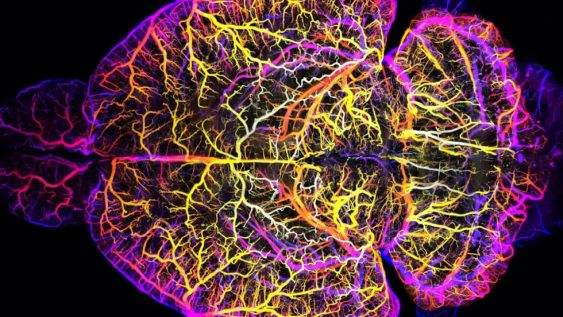
| © Helmholtz-Gemeinschaft Deutscher Forschungszentren e.V., Helmholtz Association of German Research Centres / Ali Ertürk | | | | | |
|
|
|
With advanced technological capabilities come new opportunities to better understand and treat diseases. This mission lies at the heart of the research conducted at Helmholtz Munich. As a leading hub for environmental health, it comprises six research centres dedicated to developing breakthrough solutions for improving human health – including centres for bioengineering and computational health, as well as the Institute for Intelligent Biotechnologies.
Taking an interdisciplinary and international approach, Helmholtz Munich develops and applies new biotechnological tools and methods, working closely with partners to translate research into real-world applications – from 3D imaging to AI-powered diagnostics. If you want to learn more about biotechnology in life sciences and work at Helmholtz Munich, visit the website and discover opportunities for international researchers! | | | |
|
Groundbreaking research from Germany | | | | |
Germany is home to some of the world’s leading research institutions. We highlight contributions from a few of them, giving you a closer look at pioneering projects and discoveries. Find more on our website!
|
|
| 🔗 Read more articles on our website. | | | |
|
|
|
|
|
A closer look: work in Germany | | | | |
|
|
|
|
| Artificial intelligence is revolutionising the way we work. At Bayer Pharma in Berlin, AI is an integral part of drug discovery and clinical trials, with the company collaborating with local partners such as Aignostics and Charité. In this interview, Dr Jordi Casanellas, Director of AI at Bayer Pharma, shares his insights into how AI drives the development of new treatments, more efficient trials and improved diagnostic accuracy – all without compromising ethical responsibilities. Read the full interview to learn about the power of AI in biotechnology and why you shouldn’t miss out on Berlin’s health tech and AI ecosystem. | | | | | | |
|
|
|
|
|
| Many researchers from non-EU countries who come to Germany to work have the same questions: “Will my university degree be recognised? Where can I find a job? And which documents should I include in the application?” This article answers all these questions for you, provides information on where to get career advice and shares helpful links for further guidance. Be sure to also check out the FAQ section for answers to other questions you might have. | | | | | | |
|
|
|
The bigger picture: life in Germany | | | | |
|
|
|
|
| Sometimes, all it takes to learn something new is a short amount of time and a cup of coffee (or tea). This is the idea behind the podcast “Coffee Break German”, a language-learning podcast for all levels – from absolute beginners to advanced learners. Episodes typically last between ten and twenty minutes, focusing on a specific lesson or topic. If you already know a bit of German and prefer a more playful approach, you can also explore additional formats, such as “Scenes from the Coffee Break German Café” or “The Great Coffee Break Treasure Hunt”. So make yourself a cup of coffee, visit the website and start your German lessons today! | | | | | | |
|
|
|
|
|
|
|
| In 2005, the Federal Ministry of Research, Technology and Space (BMFTR) launched the “Gründungsoffensive Biotechnologie” (GO-Bio) to support research and innovation in life sciences. In December 2025, the BMFTR improved its second funding guideline, GO-Bio next, which is designed to support researchers who are ready to take the next step and want to found their own company. Find out more about GO-Bio initial and GO-Bio next on the website. | | | | | | |
|
|
|
| The World Design Organization has chosen a German region as World Design Capital for the first time! With the theme “Design for Democracy. Atmospheres for a better life”, Frankfurt and the Rhine-Main region secured the award this year. The city and surrounding area will become the stage for over 2,000 events, including three international conferences. Follow the link to learn more about Frankfurt, the award and the programme! | | | | | | |
|
|
|
| Researchers at the Institute of Computational Biology (ICB) at Helmholtz Munich and Mila – Quebec Artificial Intelligence Institute in Montreal have developed a new artificial intelligence method called BioPathNet. This method helps to systematically search large biological data networks for hidden connections and generate hypotheses. Read about the AI and its potential applications in biotechnological research in this article. | | | | | | |
|
|
|
|
|
|
|
|
|
21. & 22.04.
|
APR 2026 · LEIPZIG / GERMANY | | | | |
| | |
|---|
| |
|
21.05.
|
MAY 2026 · UTRECHT / NETHERLANDS | | | | |
| | |
|
30.06. – 01.07.
|
JUNE / JUL 2026 · MUNICH / GERMANY | | | | |
| | |
|---|
| |
|
21. – 23.08.
|
AUG 2026 · SAN FRANCISCO / USA | | | | |
| | | |
|---|
| |
|
|
|
|
| Get updates about research career options and funding opportunities in Germany, the latest research news, interesting research projects and upcoming events. | | | |
|
|
|
|
|
This newsletter has been prepared by:
Deutscher Akademischer Austauschdienst e.V. (DAAD)
Kennedyallee 50
D-53175 Bonn
Tel.: +49 228 882-0
Fax: +49 228 882-444
E-Mail: webmaster@daad.de
Internet: https://www.daad.de/en/ | | | | |
Authorised Representative of the Executive Committee:
Prof. Dr. Joybrato Mukherjee
District Court of Bonn
Register of associations,
number VR 2107
Sales tax number: DE122276332
Person responsible according to
§ 18 Abs. 2 MStV: Dr. Kai Sicks
Kennedyallee 50, 53175 Bonn | | | | |
|---|
| |
Editors:
Dr. Berenike Schröder (responsible), DAAD e.V.
familie redlich AG – Agentur für Marken
und Kommunikation | | | | |
Liability notice:
We are not liable for the content of any website run by third parties.This remains solely the responsibility of the third parties. | | | | |
Copyright © by DAAD e.V.
The content of this newsletter is copyright-protected. All rights reserved. The full or partial reproduction of a text or images without prior permission by the DAAD is prohibited. | | | | |
|
|