|
|
|
|
|
|
|
|
|
Dear reader,
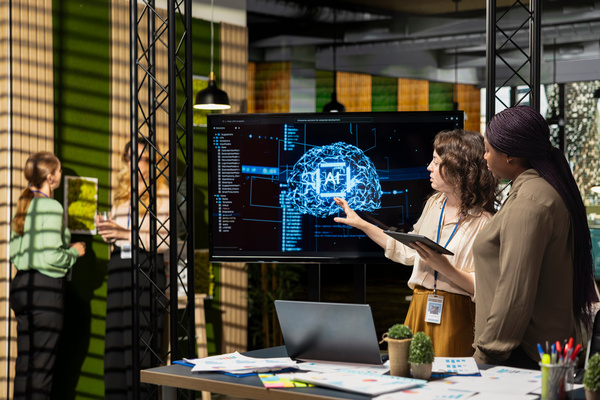
Artificial intelligence (AI) has taken the world by storm. From robotics and large language models to autonomous driving: it transforms almost every aspect of the way we live, work and conduct research. This is why the Federal Ministry of Research, Technology and Space (BMFTR) named it one of Germany’s key technologies.
Germany has already built a strong and competitive AI research ecosystem and is home to some of the world’s leading research institutions. In February, one of Europe’s largest AI computing hubs opened in Munich, and the German government received an award for “Best Use of AI in Government Services”. To drive innovation even further in the coming years, the BMFTR plans to invest more than 1.6 billion euros in AI between 2025 and 2029.
In this newsletter, we give you an overview of Germany’s AI research landscape, explore links between science and industry and present upcoming AI events. Happy reading! | | | | |
|
| Wherever you see this tag, the post connects to our monthly spotlight topic. | | | | | | |
|
|
Apply by: 15 April 2026
Students & (future) PhDs: all disciplines except for medical studies; Muslims from Egypt, Bosnia and Herzegovina and Turkey | | | | |
International Scholarship Program for Muslim Students and Doctoral Candidates | | | | |
| | |
|
|
Apply by: 15 April 2026
(Future) PhDs & Postdocs: all disciplines, researchers from sub-Saharan African countries | | | | |
TWAS-DFG Cooperation Visits Programme – SSA | | | | |
| | |
|
|
Apply by: 15 April 2026
(Future) PhDs & Postdocs: all disciplines, researchers from MENA countries | | | | |
TWAS-DFG Cooperation Visits Programme – MENA | | | | |
| | |
|
|
Apply by: 1 May or 1 November 2026
(Future) PhDs: all disciplines; thematic focus on heritage conservation, architecture and urban planning | | | | |
Wüstenrot Doctoral Scholarships | | | | |
| | |
|
|
|
|
Apply by: 5 May 2026
(Future) Postdocs: all disciplines | | | | |
Fellowships on Security and Technology | | | | |
| | |
|
|
Apply by: 6 May 2026
(Future) PhDs: all disciplines | | | | |
Klaus Murmann Fellowship Programme: scholarships for doctoral researchers | | | | |
| | |
|
|
Apply by: 1 July 2026
(Future) Postdocs: life sciences, natural sciences and social and human sciences | | | | |
Max Planck-Weizmann Postdoctoral Programme | | | | |
| | |
|
|
Apply by: various deadlines (depending on applicant’s country of origin)
(Future) Graduates, PhDs, Postdocs & Advanced researchers: all disciplines | | | | |
Re-invitation Programme for Former Scholarship Holders | | | | |
| | |
|
|
|
| © Netzwerk der Deutschen Kompetenzzentren für Forschung zu Künstlicher Intelligenz | | | | | |
|
|
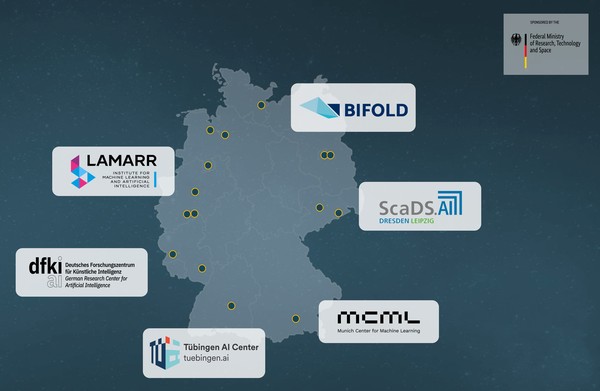
Germany’s six national AI competence centres
|
Germany is becoming a real powerhouse in AI research. As part of the national AI strategy, the Federal Ministry of Research, Technology and Space (BMFTR) funds six AI competence centres that conduct cutting-edge research – from basic research to industry application. Five of the centres are based at universities across Germany and receive up to 50 million euros in funding annually. The German Research Center for Artificial Intelligence (DFKI), the world’s largest independent AI research centre, stands out as a non-university competence centre funded by the BMFTR, receiving up to 11 million euros in project funding per year.
Together, the centres form a network that shares expertise and results, strengthening Germany’s position as a leading hub for AI, machine learning and robotics. Discover the six competence centres – and perhaps even find the perfect place for your research stay in Germany! | | | |
|
Groundbreaking research from Germany | | | | |
Germany is home to some of the world’s leading research institutions. We highlight contributions from a few of them, giving you a closer look at pioneering projects and discoveries. Find more on our website!
|
|
| 🔗 Read more articles on our website. | | | |
|
|
|
|
|
|
|
A closer look: work in Germany | | | | |
|
|
|
|
| Want to work and do research in AI in Germany? Germany has plenty to offer when it comes to AI research at the top global level – but where should you start? On our website, we provide a helpful overview of the German AI landscape for international scientists. Focusing on two selected fields – medicine and robotics – the website highlights current developments and key players in AI research across the country. Whether it’s supercomputing, secure data for better health care, maritime robotics in underwater labs or industrial AI: discover what Germany has to offer for AI experts. Be sure to read until the end of the website, where you will find further information on funding opportunities and leading AI research institutions in Germany. | | | | | | |
|
|
|
|
|
| AI can revolutionise the workplace – but does it also affect life and job satisfaction? This question is explored in a recent VoxEU column examining studies on how AI is transforming workers’ well-being in Germany. The column presents data on the impact of AI across several dimensions, including life and job satisfaction, worries and (mental) health. While the findings suggest improvements in physical health and no significant decline in life or job satisfaction, the picture looks a little different when it comes to self-reported use of AI tools. Read the full column to learn more about the effects of AI – and why data from Germany may also provide insights for other countries. | | | | | | |
|
|
|
The bigger picture: life in Germany | | | | |
|
|
|
|
| Cash or card? Tip or no tip? In Germany, eating out is an important part of everyday culture and socialising with friends and family. While most people think of beer and schnitzel when it comes to German food, there is a wide variety of cuisines in Germany. But whether you visit an Italian, Vietnamese or German restaurant, there are certain things you should – and shouldn’t – do when dining out. The video offers a light-hearted guide to help you navigate your next restaurant visit. | | | | | | |
|
|
|
|
|
|
|
| Are you passionate about AI research and would like to pursue your master’s or PhD? The German Academic Exchange Service’s (DAAD) Zuse Schools offer funding and training opportunities for international AI talents in Germany. The three graduate schools provide an ideal environment for young researchers to expand their skills, gain practical experience and find their path in AI research. This new multimedia story highlights three talents from the programme and offers a glimpse into their personal impressions of the Zuse Schools. | | | | | | |
|
|
|
| Cyber Valley – Europe’s largest and leading centre for AI and modern robotics research – turns ten this year! Founded in 2016, it has since established itself as a pioneer in AI research, bringing together partners from politics, science, society and industry. Cyber Valley focuses on fundamental research, supports young scientists and fosters a strong start-up culture to accelerate the transfer of ideas from the lab to industry. Check out the website to learn more about one of Germany’s leading AI hubs and discover open positions for researchers! | | | | | | |
|
|
|
|
|
|
|
|
|
|
01. – 05.06.
|
JUNE 2026 · LEIPZIG / GERMANY | | | | |
| | |
|
22. – 26.06.
|
JUNE 2026 · LEIPZIG / GERMANY | | | | |
| | |
|---|
| |
|
07. & 08.07.
|
JUL 2026 · BONN / GERMANY | | | | |
| | |
|
15. – 21.08.
|
AUG 2026 · BREMEN / GERMANY | | | | |
| | |
|---|
| |
|
|
| Get updates about research career options and funding opportunities in Germany, the latest research news, interesting research projects and upcoming events. | | | |
|
|
|
|
|
|
|
|
This newsletter has been prepared by:
Deutscher Akademischer Austauschdienst e.V. (DAAD)
Kennedyallee 50
D-53175 Bonn
Tel.: +49 228 882-0
Fax: +49 228 882-444
E-Mail: webmaster@daad.de
Internet: https://www.daad.de/en/ | | | | |
Authorised Representative of the Executive Committee:
Prof. Dr. Joybrato Mukherjee
District Court of Bonn
Register of associations,
number VR 2107
Sales tax number: DE122276332
Person responsible according to
§ 18 Abs. 2 MStV: Dr. Kai Sicks
Kennedyallee 50, 53175 Bonn | | | | |
|---|
| |
Editors:
Dr. Berenike Schröder (responsible), DAAD e.V.
familie redlich AG – Agentur für Marken
und Kommunikation | | | | |
Liability notice:
We are not liable for the content of any website run by third parties.This remains solely the responsibility of the third parties. | | | | |
Copyright © by DAAD e.V.
The content of this newsletter is copyright-protected. All rights reserved. The full or partial reproduction of a text or images without prior permission by the DAAD is prohibited. | | | | |
|
|