|
|
|
|
|
|
|
|
|
Dear reader,
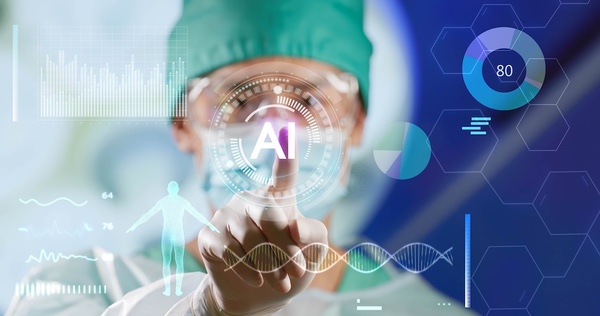
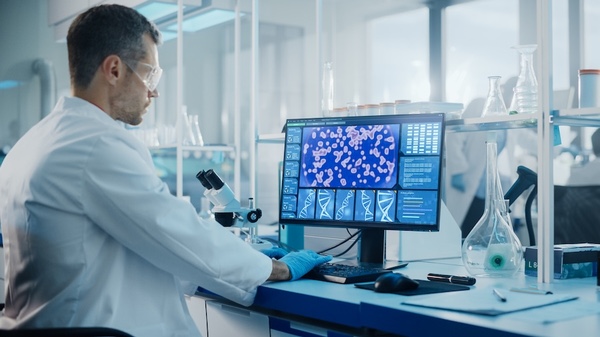
This month, we cast a spotlight on the future of medicine, exploring how groundbreaking research and digital transformation are redefining healthcare in Germany and beyond.
From a single-cell search engine at the Max Delbrück Center to the integration of AI in daily clinical practice, medical science is rapidly evolving towards a model that is preventive, personalised, digital and participatory. The Science Year 2026 – Medicine of the Future invites researchers, industry experts and the public alike to actively shape tomorrow’s healthcare solutions.
Beyond our medical focus, this edition brings you opportunities across all scientific disciplines. You will find a fresh round of funding calls and fellowships from various institutions across Germany. Furthermore, we highlight practical tools for your research journey, including access to national health data and essential guidance on German working conditions. At the end, you get the chance vote for the December issue’s spotlight topic.
Whether you are interested in medical research or any other field – we hope this issue provides valuable insights and inspiration for your work and projects! | | | | |
|
| Wherever you see this tag, the post connects to our monthly spotlight topic. | | | | | | |
|
|
|
|
Apply by: 15 October 2026
(Future) Postdocs & Advanced researchers: natural or engineering sciences, medicine or psychology | | | | |
Doctoral Positions Hector Fellow Academy | | | | |
| | |
|
|
|
|
Apply by: 30 October 2026
(Future) Postdocs & Advanced researchers: natural or engineering sciences, medicine, psychology | | | | |
Hector Research Career Development Award | | | | |
| | |
|
|
|
|
Apply by: 2 November 2026
(Future) PhDs: technologies for climate-neutral energy and climate protection, AI, digitalisation, microelectronics, security in Europe, biotechnology, medicine of the future, impact of new technologies on society | | | | |
Future Network Weimar Triangle | | | | |
| | |
|
|
|
|
Apply by: 2 November 2026
(Future) PhDs: interdisciplinary fields of cognition and photonics | | | | |
Max Planck Schools 4th Fellows Open Call | | | | |
| | |
|
|
Apply by: 18 November 2026
(Future) Advanced researchers: humanities, cultural studies, social sciences | | | | |
|
| | |
|
|
Apply by: 20 November 2026
(Future) Postdocs: historical humanities | | | | |
General Research Grants: Scholarships | | | | |
| | |
|
|
Apply by: 30 November 2026
Female (future) PhDs & Postdocs with children: experimental natural sciences and basic medical research | | | | |
|
| | |
|
|
|
|
Apply by: 30 November 2026
(Future) Postdocs: translational cardiovascular research | | | | |
DZHK Junior Research Group fellowship | | | | |
| | |
|
|
|
|
Apply by: 1 December 2026
(Future) PhDs: areas related to cognition | | | | |
Max Plack School of Cognition PhD Program | | | | |
| | |
|
|
|
|
Apply by: 1 December 2026
(Future) PhDs: computer science, mathematics, statistics, engineering, physics, or the life sciences | | | | |
Max Planck School of Biomedical AI | | | | |
| | |
|
|
Apply by: 8 January 2027
(Future) Postdocs: AI, digital sovereignty, trustworthy information infrastructure | | | | |
|
| | |
A spotlight on: future medicine | | | | |
|
|
|
|
Change the future of medicine with research at the Max Delbrück Center
|
If you want your research to contribute to innovations that change medicine, the Max Delbrück Center is the right place for you. Scientists at the Center research topics such as cell-based medicine, molecular processes and therapies, or integrative biomedicine. Translational vascular biomedicine, data science and AI, immunology and inflammation, and single cells are cross-cutting areas topping off its research programme.
The Center’s website displays current projects and innovations such as Malva – a search engine that can scan data from millions of single cells from thousands of experiments worldwide. With Malva, doctors can understand exactly which cells caused a patient’s cancer or whether pathogens contributed to the disease, for example.
Visit the Max Delbrück Center’s website to explore their research programmes, labs, platforms, events, networks, job vacancies and more! | | | |
|
Groundbreaking research from Germany | | | | |
Germany is home to some of the world’s leading research institutions. We highlight contributions from a few of them, giving you a closer look at pioneering projects and discoveries. Find more on our website!
|
|
| 🔗 Read more articles on our website. | | | |
|
|
|
|
|
|
|
A closer look: work in Germany | | | | |
|
|
|
|
The German Research Data Portal for Health (FDPG) offers data to scientists carrying out research projects using health data. The FDPG’s data are sourced from German university hospitals and epidemiological cohort studies. The tool offers a standardised process for requesting data and bio samples and an established contractual framework for easy data use. It includes central coordination of data provision and transparent presentation of research projects in the project register. Most importantly, it provides an overview of data sets for cross-location research and the chance to evaluate the feasibility of research questions.
You can register and log in on their website to use a wide range of data for your research project. You are going to find a project registry, patient information, support service and all necessary details. | | | | | | |
|
|
|
|
|
| If you are new to Germany or are planning to conduct research here, you might be overwhelmed with the rules, laws and customs around working conditions. The EURopean Employment Services (EURES) explains topics such as sick leave, statutory minimum wage and everything else you need to work in Germany. No matter if you are already working here or if you are still planning your stay – the website offers a comprehensive overview of all you need to know to be successful on your work journey in Germany. | | | | | | |
|
|
|
The bigger picture: life in Germany | | | | |
|
|
|
|
| Are you wondering how you can profit from digitalised healthcare in Germany? gesund.bund gives a comprehensive overview and answers questions around the advantages of healthcare digitalisation, the use of digital health services and the protection of medical data. On their website, you will find details on how you benefit from AI applications in medical life, how electronic patient records are securely used and which “apps on prescription” are available. Read up on all you need to know about the digital healthcare system in Germany on gesund.bund! | | | | | | |
|
|
|
|
|
|
|
| The Science Year 2026 – Medicine of the Future is a joint public dialogue initiative organised by Germany’s Federal Ministry of Research, Technology and Space (BMFTR) and Wissenschaft im Dialog (WiD). It focuses on advancing healthcare through preventive, personalised, digital and participatory solutions, with a special emphasis on gender-sensitive research and AI-assisted diagnostics. The program invites the public, researchers, businesses and policymakers to engage in nationwide events, projects and discussions to shape tomorrow’s medical developments. Skip over to their website to explore expert interviews, articles and events, while also accessing participation opportunities, partner organisation profiles and a monthly newsletter. | | | | | | |
|
|
|
| The German electronic patient file is one step towards tomorrow’s medicine. Since April 2025, German health insurance companies offer people with statutory health insurance in Germany the option to use the electronic personal health record (ePA). Bringing lots of benefits for healthcare, the ePA improves the exchange and use of health data between treating physicians and other institutions offering health services to make patient care more efficient and effectful. Important documents such as doctor’s letters, lab results, medication plans and more can be stored securely on the ePA and are always available to authorised persons and institutions. | | | | | | |
|
|
|
| BioRN (BioRN Network e. V.) is a non-profit life science and biotech innovation cluster based in the Rhine-Neckar region around Heidelberg, Germany. It serves as a central hub connecting academic research institutions, biotechnology startups, global pharmaceutical companies and regional economic partners. BioRN focuses on biomedical research, drug development, target discovery, personalised medicine, conferences, events and networking. In 2026, they celebrate their 30th anniversary! Browse their website to explore their services, membership and career options, news and events. | | | | | | |
|
|
|
| Want to share your research experience in Germany? We are looking for international researchers who would like to give an international audience an authentic glimpse into research and life in Germany. As a testimonial, you will create content for the Research in Germany website and social media channels, offering insights into your research environment, lessons you’ve learned along the way and your personal perspective on living and working in Germany. Find out more about the benefits, requirements and application process – and apply by 18 October 2026! | | | | | | |
|
|
|
|
|
|
21.10.
|
OCT 2026 · MUNICH / GERMANY | | | | |
| | |
|
28.10. – 02.11.
|
OCT & NOV 2026 · HALLE (SAALE) / GERMANY | | | | |
| | |
|---|
| |
|
01. – 10.11.
|
NOV 2026 · BERLIN / GERMANY | | | | |
| | |
|
06. – 09.11.
|
NOV 2026 · BERLIN / GERMANY | | | | |
| | |
|---|
| |
|
09. – 11.11.
|
NOV 2026 · COLOGNE / GERMANY | | | | |
| | |
|
03. & 04.12.
|
DEC 2026 · ONLINE | | | | |
| | |
|---|
| |
|
22. & 23.12.
|
DEC 2026 · PARIS / FRANCE | | | | |
| | | |
|---|
| |
|
|
| Vote and decide: what should be the spotlight topic for our newsletter’s December issue? | | | | |
|
|
|
|
|
| Get updates about research career options and funding opportunities in Germany, the latest research news, interesting research projects and upcoming events. | | | |
|
|
|
|
|
This newsletter has been prepared by:
Deutscher Akademischer Austauschdienst e.V. (DAAD)
Kennedyallee 50
D-53175 Bonn
Tel.: +49 228 882-0
Fax: +49 228 882-444
E-Mail: webmaster@daad.de
Internet: https://www.daad.de/en/ | | | | |
Authorised Representative of the Executive Committee:
Prof. Dr. Joybrato Mukherjee
District Court of Bonn
Register of associations,
number VR 2107
Sales tax number: DE122276332
Person responsible according to
§ 18 Abs. 2 MStV: Dr. Kai Sicks
Kennedyallee 50, 53175 Bonn | | | | |
|---|
| |
Editors:
Dr. Berenike Schröder (responsible), DAAD e.V.
familie redlich AG – Agentur für Marken
und Kommunikation | | | | |
Liability notice:
We are not liable for the content of any website run by third parties.This remains solely the responsibility of the third parties. | | | | |
Copyright © by DAAD e.V.
The content of this newsletter is copyright-protected. All rights reserved. The full or partial reproduction of a text or images without prior permission by the DAAD is prohibited. | | | | |
|
|